Setting up the ductwork is a vital action in setting up a ducted heating system. This procedure, while detailed, can be handled successfully with a little preparation and the right tools. The ductwork functions as the network of paths that disperse warm air from the heating unit throughout your home, guaranteeing regular and comfortable temperatures in every space.
To start, its important to have a clear understanding of your homes format and the heating needs of each room. This will certainly help in establishing one of the most reliable paths for the air ducts. Beginning by producing an in-depth strategy that includes the areas of the heating unit, the major trunk lines, and where the branches will certainly lead off to individual vents. This strategy will certainly lead you with the installation procedure and assistance to decrease mistakes.
When you have your plan, gather your products. Youll require ductwork, adapters, wall mounts, and insulation, together with tools such as a measuring tape, tin snips, and a drill. The type of ductwork you choose is necessary, with options varying from flexible to inflexible metal ducts. Adaptable air ducts are easier to install and can browse around challenges, but inflexible ducts are much more sturdy and efficient in regards to air flow.
Start the installation by establishing the primary trunk line, which will certainly carry air from the heating system to the remainder of the system. Safeguard it firmly and ensure that it is effectively supported by wall mounts to stop drooping, which can reduce performance. Next off, mount the branch lines that will certainly extend from the trunk line to the numerous areas. As you do this, see to it to use the proper ports to preserve a limited seal and avoid air leakages.
It is vital to insulate the ductwork, particularly in locations that travel through unheated rooms like attics or basements. Insulation helps to preserve the temperature level of the air as it travels via the ducts, making certain that it gets to each space at the preferred heat without shedding warmth in the process.
Ultimately, test the system to ensure that everything is functioning properly. Look for air leaks by running the system and sensation along the ductwork for any type of running away air. If you locate leaks, secure them with duct tape or mastic. Make any kind of essential modifications to the air flow to make certain that each room obtains the ideal amount of warmth.
Installing ductwork calls for precision and attention to detail, however with careful preparation and execution, it can be completed effectively. The result is a reliable and reliable heating unit that keeps your home cozy and comfy throughout the chillier months.
Linking the Heating Device
Attaching the heating device is a crucial action in the installation of ducted heating systems, a process that, when carried out properly, guarantees the effective and reliable circulation of warmth throughout a home or structure. This task entails linking the central heating system, commonly described as the furnace or heating system, to the network of ducts that will certainly carry cozy air to various spaces. Making sure a proper link is vital for the total efficiency of the heating unit, as it straight affects the power effectiveness and convenience levels within the home.
To start with, it is necessary to have a clear understanding of the design of the structure and the positioning of the heating unit. The unit is typically mounted in a central place, such as a cellar or utility room, to maximize the distribution of heat. Prior to making any kind of links, make sure that the device is firmly in place and that all security methods are adhered to, consisting of disconnecting source of power and verifying that gas lines, if appropriate, are appropriately secured and fitted to prevent leakages.
The connection procedure begins with affixing the main plenum to the heating unit. The plenum is the huge duct that works as the main network for air circulation. It is essential to make certain that the plenum is correctly aligned and safely affixed to the heating system, as any kind of voids or imbalances can lead to air leakages, lowering the performance of the system. Use ideal securing materials, such as air duct mastic or metal-backed tape, to seal any seams or joints and protect against loss of heated air.
Next, the ductwork that expands from the plenum to numerous components of the building need to be linked. This entails connecting the major supply air ducts to the plenum and then branching off to smaller ducts that bring about private areas. Each link needs to be meticulously checked for safe and secure fittings and proper sealing to maintain the honesty of the air circulation. Dampers may be installed within the ductwork to regulate the circulation of air to different locations, permitting much more specific control of temperature levels in individual spaces.
Furthermore, it is essential to link the return duct to the heating system. These ducts are responsible for bringing cooler air back to the system to be reheated. The return duct need to be placed tactically to ensure efficient air blood circulation throughout the building. Appropriate insulation of these ducts is likewise vital to avoid warm loss and improve the overall performance of the heater.
Ultimately, once all physical links are made, it is necessary to evaluate the system. This entails powering up the heating device and looking for any type of air leakages, uncommon sounds, or irregular temperature level circulation. Any type of issues must be dealt with promptly to ensure the system operates at peak performance.
To conclude, linking the heating device in a ducted heating unit calls for cautious attention to information and adherence to safety criteria. By making certain that all connections are safe and secure and correctly secured, you can improve the performance and dependability of your heating unit, providing regular warmth and convenience throughout your home. This action, though relatively technological, is an integral part of developing a comfy living setting during the chillier months.
Examining the System
Checking the system is an important phase in the installation of ducted heating, ensuring that the configuration functions efficiently and safely. After all the hard work of preparation, selecting the best components, and thoroughly installing the system, you wish to make certain that your new ducted heating runs efficiently to offer heat and convenience throughout your home.
Once the installation is full, the initial action in evaluating the system is to execute a visual evaluation. This includes inspecting all the connections and joints to ensure they are protected. Any kind of loosened or improperly linked ducts can lead to significant inadequacies or even pose safety and security dangers. Its additionally necessary to validate that the thermostat is properly set up and that all electrical connections are secure and effectively protected.
Adhering to the aesthetic assessment, the system ought to be powered on for a dry run. This is where you evaluate the functionality of the whole ducted furnace. Begin by setting the thermostat to a higher temperature level than the present room temperature to motivate the heating system to activate. Listen for any kind of uncommon noises that might indicate concerns with the fan or the motor. The airflow should be consistent and equally distributed throughout all the vents in your house.
It is additionally essential to look for any type of uncommon odors, which could suggest a problem with the heater or the heat exchanger. A mild smell of shedding dirt is typical during the very first few mins of procedure, especially if the system has actually not been utilized for a prolonged period. Nonetheless, relentless smells need to be checked out immediately.
Additionally, gauging the outcome temperature at numerous vents will aid ensure that the system is heating effectively which there are no blockages or leakages in the air ducts. The temperature needs to rise consistently and uniformly, mirroring that the system is dispersing heat as expected.
Ultimately, after the preliminary test run, keep an eye on the system over a couple of days. This recurring observation will help verify that the thermostat maintains the desired temperature level which the system cycles on and off appropriately. Any kind of irregularities in the system's performance ought to be attended to immediately to avoid further issues.
In recap, evaluating the system is an essential component of installing ducted heating. By performing an extensive examination and monitoring the system's efficiency, you make sure that your heating remedy is secure, efficient, and ready to keep your home comfy throughout the colder months. This persistent method not only safeguards your financial investment but additionally assures satisfaction for you and your household.
Final Examinations and Safety And Security Checks
Final Inspections and Safety Checks are crucial components in the procedure of installing a ducted heater. These steps make certain not just the appropriate performance of the system however likewise the safety and comfort of those who will certainly be using it. Just like any type of significant home improvement job, making the effort to extensively check and verify the installation can protect against future problems and supply peace of mind.
Once the installation of your ducted heating unit is complete, carrying out a final inspection is necessary. This entails an extensive review of the whole system to verify that all components are properly mounted and operating as meant. Begin by checking the thermostat to guarantee it is appropriately adjusted and capable of accurately keeping the preferred temperature. An improperly calibrated thermostat can lead to inefficient heating and increased power prices.
Next off, examine the ductwork to validate that it is securely attached and without any kind of blockages or leakages. Leaking air ducts can cause substantial warm loss, reducing the efficiency of the system and increasing utility expenses. In addition, examine the vents to guarantee they are open and unobstructed, allowing for optimum air movement throughout the home.
The security of your furnace is of utmost importance. Carrying out safety checks entails several vital steps. Initially, verify that all electric links are protected and that there are no subjected wires that can posture a fire danger. If your system is gas-powered, look for any gas leaks by using a gas leak detector or a solution of soap and water related to the connections. If bubbles form, there might be a leakage that requires instant focus from a professional. Choosing the Best Ducted Heating System for Your Needs .
Make sure that the location around the heating system is free from any kind of flammable products. This safety measure decreases the danger of accidental fires and boosts the total safety of your home. In addition, it is smart to mount carbon monoxide gas detectors near the heating unit and in living locations to monitor for any kind of harmful levels of this odorless, colorless gas.
Finally, it is valuable to carry out a trial run of the system to observe its performance. Activate the furnace and enable it to run for a couple of cycles. Pay attention for any type of uncommon noises, such as rattling or banging, which could show loosened parts or various other problems that need resolving. Monitor the systems capacity to keep a consistent temperature throughout the home.
In conclusion, final inspections and security checks are vital to making sure that your ducted heating unit is installed properly and operates safely. By putting in the time to perform these checks, you can stay clear of prospective troubles, boost the systems performance, and make sure a secure and comfortable environment for you and your family members. Bear in mind, when doubtful, consulting with a specialist can supply additional guarantee and know-how.
About Heating, ventilation, and air conditioning
Technology of indoor and vehicular environmental comfort
Diagram showing main components of an HVAC systemRooftop HVAC unit with view of fresh-air intake ventVentilation duct with outlet diffuser vent. These are installed throughout a building to move air in or out of rooms. In the middle is a damper to open and close the vent to allow more or less air to enter the space.The control circuit in a household HVAC installation. The wires connecting to the blue terminal block on the upper-right of the board lead to the thermostat. The fan enclosure is directly behind the board, and the filters can be seen at the top. The safety interlock switch is at the bottom left. In the lower middle is the capacitor.
Heating, ventilation, and air conditioning (HVAC/ˈeɪtʃˌvæk/) systems use advanced technologies to regulate temperature, humidity, and indoor air quality in residential, commercial, and industrial buildings. Modern HVAC designs focus on energy efficiency and sustainability, especially with the rising demand for green building solutions. Its goal is to provide thermal comfort and acceptable indoor air quality. HVAC system design is a subdiscipline of mechanical engineering, based on the principles of thermodynamics, fluid mechanics, and heat transfer. In modern construction, MEP (Mechanical, Electrical, and Plumbing) engineers integrate HVAC systems with energy modeling techniques to optimize system performance and reduce operational costs. "Refrigeration" is sometimes added to the field's abbreviation as HVAC&R or HVACR, or "ventilation" is dropped, as in HACR (as in the designation of HACR-rated circuit breakers).
HVAC is an important part of residential structures such as single family homes, apartment buildings, hotels, and senior living facilities; medium to large industrial and office buildings such as skyscrapers and hospitals; vehicles such as cars, trains, airplanes, ships and submarines; and in marine environments, where safe and healthy building conditions are regulated with respect to temperature and humidity, using fresh air from outdoors.
Ventilating or ventilation (the "V" in HVAC) is the process of exchanging or replacing air in any space to provide high indoor air quality which involves temperature control, oxygen replenishment, and removal of moisture, odors, smoke, heat, dust, airborne bacteria, carbon dioxide, and other gases. Ventilation removes unpleasant smells and excessive moisture, introduces outside air, and keeps interior air circulating. Building ventilation methods are categorized as mechanical (forced) or natural.[1]
The three major functions of heating, ventilation, and air conditioning are interrelated, especially with the need to provide thermal comfort and acceptable indoor air quality within reasonable installation, operation, and maintenance costs. HVAC systems can be used in both domestic and commercial environments. HVAC systems can provide ventilation, and maintain pressure relationships between spaces. The means of air delivery and removal from spaces is known as room air distribution.[2]
In modern buildings, the design, installation, and control systems of these functions are integrated into one or more HVAC systems. For very small buildings, contractors normally estimate the capacity and type of system needed and then design the system, selecting the appropriate refrigerant and various components needed. For larger buildings, building service designers, mechanical engineers, or building services engineers analyze, design, and specify the HVAC systems. Specialty mechanical contractors and suppliers then fabricate, install and commission the systems. Building permits and code-compliance inspections of the installations are normally required for all sizes of buildings
Although HVAC is executed in individual buildings or other enclosed spaces (like NORAD's underground headquarters), the equipment involved is in some cases an extension of a larger district heating (DH) or district cooling (DC) network, or a combined DHC network. In such cases, the operating and maintenance aspects are simplified and metering becomes necessary to bill for the energy that is consumed, and in some cases energy that is returned to the larger system. For example, at a given time one building may be utilizing chilled water for air conditioning and the warm water it returns may be used in another building for heating, or for the overall heating-portion of the DHC network (likely with energy added to boost the temperature).[3][4][5]
Basing HVAC on a larger network helps provide an economy of scale that is often not possible for individual buildings, for utilizing renewable energy sources such as solar heat,[6][7][8] winter's cold,[9][10] the cooling potential in some places of lakes or seawater for free cooling, and the enabling function of seasonal thermal energy storage. Utilizing natural sources for HVAC can significantly benefit the environment and promote awareness of alternative methods.
Multiple inventions within this time frame preceded the beginnings of the first comfort air conditioning system, which was designed in 1902 by Alfred Wolff (Cooper, 2003) for the New York Stock Exchange, while Willis Carrier equipped the Sacketts-Wilhems Printing Company with the process AC unit the same year. Coyne College was the first school to offer HVAC training in 1899.[12] The first residential AC was installed by 1914, and by the 1950s there was "widespread adoption of residential AC".[13]
The invention of the components of HVAC systems went hand-in-hand with the Industrial Revolution, and new methods of modernization, higher efficiency, and system control are constantly being introduced by companies and inventors worldwide.
Heaters are appliances whose purpose is to generate heat (i.e. warmth) for the building. This can be done via central heating. Such a system contains a boiler, furnace, or heat pump to heat water, steam, or air in a central location such as a furnace room in a home, or a mechanical room in a large building. The heat can be transferred by convection, conduction, or radiation. Space heaters are used to heat single rooms and only consist of a single unit.
Heaters exist for various types of fuel, including solid fuels, liquids, and gases. Another type of heat source is electricity, normally heating ribbons composed of high resistance wire (see Nichrome). This principle is also used for baseboard heaters and portable heaters. Electrical heaters are often used as backup or supplemental heat for heat pump systems.[citation needed]
The heat pump gained popularity in the 1950s in Japan and the United States.[14] Heat pumps can extract heat from various sources, such as environmental air, exhaust air from a building, or from the ground. Heat pumps transfer heat from outside the structure into the air inside. Initially, heat pump HVAC systems were only used in moderate climates, but with improvements in low temperature operation and reduced loads due to more efficient homes, they are increasing in popularity in cooler climates. They can also operate in reverse to cool an interior.[citation needed]
In the case of heated water or steam, piping is used to transport the heat to the rooms. Most modern hot water boiler heating systems have a circulator, which is a pump, to move hot water through the distribution system (as opposed to older gravity-fed systems). The heat can be transferred to the surrounding air using radiators, hot water coils (hydro-air), or other heat exchangers. The radiators may be mounted on walls or installed within the floor to produce floor heat.[citation needed]
The use of water as the heat transfer medium is known as hydronics. The heated water can also supply an auxiliary heat exchanger to supply hot water for bathing and washing.[citation needed]
Warm air systems distribute the heated air through ductwork systems of supply and return air through metal or fiberglass ducts. Many systems use the same ducts to distribute air cooled by an evaporator coil for air conditioning. The air supply is normally filtered through air filters[dubious – discuss] to remove dust and pollen particles.[15]
The use of furnaces, space heaters, and boilers as a method of indoor heating could result in incomplete combustion and the emission of carbon monoxide, nitrogen oxides, formaldehyde, volatile organic compounds, and other combustion byproducts. Incomplete combustion occurs when there is insufficient oxygen; the inputs are fuels containing various contaminants and the outputs are harmful byproducts, most dangerously carbon monoxide, which is a tasteless and odorless gas with serious adverse health effects.[16]
Without proper ventilation, carbon monoxide can be lethal at concentrations of 1000 ppm (0.1%). However, at several hundred ppm, carbon monoxide exposure induces headaches, fatigue, nausea, and vomiting. Carbon monoxide binds with hemoglobin in the blood, forming carboxyhemoglobin, reducing the blood's ability to transport oxygen. The primary health concerns associated with carbon monoxide exposure are its cardiovascular and neurobehavioral effects. Carbon monoxide can cause atherosclerosis (the hardening of arteries) and can also trigger heart attacks. Neurologically, carbon monoxide exposure reduces hand to eye coordination, vigilance, and continuous performance. It can also affect time discrimination.[17]
Ventilation is the process of changing or replacing air in any space to control the temperature or remove any combination of moisture, odors, smoke, heat, dust, airborne bacteria, or carbon dioxide, and to replenish oxygen. It plays a critical role in maintaining a healthy indoor environment by preventing the buildup of harmful pollutants and ensuring the circulation of fresh air. Different methods, such as natural ventilation through windows and mechanical ventilation systems, can be used depending on the building design and air quality needs. Ventilation often refers to the intentional delivery of the outside air to the building indoor space. It is one of the most important factors for maintaining acceptable indoor air quality in buildings.
Although ventilation plays a key role in indoor air quality, it may not be sufficient on its own.[18] A clear understanding of both indoor and outdoor air quality parameters is needed to improve the performance of ventilation in terms of ...[19] In scenarios where outdoor pollution would deteriorate indoor air quality, other treatment devices such as filtration may also be necessary.[20]
Methods for ventilating a building may be divided into mechanical/forced and natural types.[21]
HVAC ventilation exhaust for a 12-story buildingAn axial belt-drive exhaust fan serving an underground car park. This exhaust fan's operation is interlocked with the concentration of contaminants emitted by internal combustion engines.
Mechanical, or forced, ventilation is provided by an air handler (AHU) and used to control indoor air quality. Excess humidity, odors, and contaminants can often be controlled via dilution or replacement with outside air. However, in humid climates more energy is required to remove excess moisture from ventilation air.
Kitchens and bathrooms typically have mechanical exhausts to control odors and sometimes humidity. Factors in the design of such systems include the flow rate (which is a function of the fan speed and exhaust vent size) and noise level. Direct drive fans are available for many applications and can reduce maintenance needs.
In summer, ceiling fans and table/floor fans circulate air within a room for the purpose of reducing the perceived temperature by increasing evaporation of perspiration on the skin of the occupants. Because hot air rises, ceiling fans may be used to keep a room warmer in the winter by circulating the warm stratified air from the ceiling to the floor.
Natural ventilation is the ventilation of a building with outside air without using fans or other mechanical systems. It can be via operable windows, louvers, or trickle vents when spaces are small and the architecture permits. ASHRAE defined Natural ventilation as the flow of air through open windows, doors, grilles, and other planned building envelopepenetrations, and as being driven by natural and/or artificially produced pressure differentials.[1]
Natural ventilation strategies also include cross ventilation, which relies on wind pressure differences on opposite sides of a building. By strategically placing openings, such as windows or vents, on opposing walls, air is channeled through the space to enhance cooling and ventilation. Cross ventilation is most effective when there are clear, unobstructed paths for airflow within the building.
In more complex schemes, warm air is allowed to rise and flow out high building openings to the outside (stack effect), causing cool outside air to be drawn into low building openings. Natural ventilation schemes can use very little energy, but care must be taken to ensure comfort. In warm or humid climates, maintaining thermal comfort solely via natural ventilation might not be possible. Air conditioning systems are used, either as backups or supplements. Air-side economizers also use outside air to condition spaces, but do so using fans, ducts, dampers, and control systems to introduce and distribute cool outdoor air when appropriate.
An important component of natural ventilation is air change rate or air changes per hour: the hourly rate of ventilation divided by the volume of the space. For example, six air changes per hour means an amount of new air, equal to the volume of the space, is added every ten minutes. For human comfort, a minimum of four air changes per hour is typical, though warehouses might have only two. Too high of an air change rate may be uncomfortable, akin to a wind tunnel which has thousands of changes per hour. The highest air change rates are for crowded spaces, bars, night clubs, commercial kitchens at around 30 to 50 air changes per hour.[22]
Room pressure can be either positive or negative with respect to outside the room. Positive pressure occurs when there is more air being supplied than exhausted, and is common to reduce the infiltration of outside contaminants.[23]
Natural ventilation [24] is a key factor in reducing the spread of airborne illnesses such as tuberculosis, the common cold, influenza, meningitis or COVID-19. Opening doors and windows are good ways to maximize natural ventilation, which would make the risk of airborne contagion much lower than with costly and maintenance-requiring mechanical systems. Old-fashioned clinical areas with high ceilings and large windows provide the greatest protection. Natural ventilation costs little and is maintenance free, and is particularly suited to limited-resource settings and tropical climates, where the burden of TB and institutional TB transmission is highest. In settings where respiratory isolation is difficult and climate permits, windows and doors should be opened to reduce the risk of airborne contagion. Natural ventilation requires little maintenance and is inexpensive.[25]
Natural ventilation is not practical in much of the infrastructure because of climate. This means that the facilities need to have effective mechanical ventilation systems and or use Ceiling Level UV or FAR UV ventilation systems.
Alpha Black Edition - Sirair Air conditioner with UVC (Ultraviolet Germicidal Irradiation)
Ventilation is measured in terms of Air Changes Per Hour (ACH). As of 2023, the CDC recommends that all spaces have a minimum of 5 ACH.[26] For hospital rooms with airborne contagions the CDC recommends a minimum of 12 ACH.[27] The challenges in facility ventilation are public unawareness,[28][29] ineffective government oversight, poor building codes that are based on comfort levels, poor system operations, poor maintenance, and lack of transparency.[30]
UVC or Ultraviolet Germicidal Irradiation is a function used in modern air conditioners which reduces airborne viruses, bacteria, and fungi, through the use of a built-in LED UV light that emits a gentle glow across the evaporator. As the cross-flow fan circulates the room air, any viruses are guided through the sterilization module’s irradiation range, rendering them instantly inactive.[31]
An air conditioning system, or a standalone air conditioner, provides cooling and/or humidity control for all or part of a building. Air conditioned buildings often have sealed windows, because open windows would work against the system intended to maintain constant indoor air conditions. Outside, fresh air is generally drawn into the system by a vent into a mix air chamber for mixing with the space return air. Then the mixture air enters an indoor or outdoor heat exchanger section where the air is to be cooled down, then be guided to the space creating positive air pressure. The percentage of return air made up of fresh air can usually be manipulated by adjusting the opening of this vent. Typical fresh air intake is about 10% of the total supply air.[citation needed]
Air conditioning and refrigeration are provided through the removal of heat. Heat can be removed through radiation, convection, or conduction. The heat transfer medium is a refrigeration system, such as water, air, ice, and chemicals are referred to as refrigerants. A refrigerant is employed either in a heat pump system in which a compressor is used to drive thermodynamic refrigeration cycle, or in a free cooling system that uses pumps to circulate a cool refrigerant (typically water or a glycol mix).
It is imperative that the air conditioning horsepower is sufficient for the area being cooled. Underpowered air conditioning systems will lead to power wastage and inefficient usage. Adequate horsepower is required for any air conditioner installed.
The refrigeration cycle uses four essential elements to cool, which are compressor, condenser, metering device, and evaporator.
At the inlet of a compressor, the refrigerant inside the system is in a low pressure, low temperature, gaseous state. The compressor pumps the refrigerant gas up to high pressure and temperature.
From there it enters a heat exchanger (sometimes called a condensing coil or condenser) where it loses heat to the outside, cools, and condenses into its liquid phase.
An expansion valve (also called metering device) regulates the refrigerant liquid to flow at the proper rate.
The liquid refrigerant is returned to another heat exchanger where it is allowed to evaporate, hence the heat exchanger is often called an evaporating coil or evaporator. As the liquid refrigerant evaporates it absorbs heat from the inside air, returns to the compressor, and repeats the cycle. In the process, heat is absorbed from indoors and transferred outdoors, resulting in cooling of the building.
In variable climates, the system may include a reversing valve that switches from heating in winter to cooling in summer. By reversing the flow of refrigerant, the heat pump refrigeration cycle is changed from cooling to heating or vice versa. This allows a facility to be heated and cooled by a single piece of equipment by the same means, and with the same hardware.
Free cooling systems can have very high efficiencies, and are sometimes combined with seasonal thermal energy storage so that the cold of winter can be used for summer air conditioning. Common storage mediums are deep aquifers or a natural underground rock mass accessed via a cluster of small-diameter, heat-exchanger-equipped boreholes. Some systems with small storages are hybrids, using free cooling early in the cooling season, and later employing a heat pump to chill the circulation coming from the storage. The heat pump is added-in because the storage acts as a heat sink when the system is in cooling (as opposed to charging) mode, causing the temperature to gradually increase during the cooling season.
Some systems include an "economizer mode", which is sometimes called a "free-cooling mode". When economizing, the control system will open (fully or partially) the outside air damper and close (fully or partially) the return air damper. This will cause fresh, outside air to be supplied to the system. When the outside air is cooler than the demanded cool air, this will allow the demand to be met without using the mechanical supply of cooling (typically chilled water or a direct expansion "DX" unit), thus saving energy. The control system can compare the temperature of the outside air vs. return air, or it can compare the enthalpy of the air, as is frequently done in climates where humidity is more of an issue. In both cases, the outside air must be less energetic than the return air for the system to enter the economizer mode.
Central, "all-air" air-conditioning systems (or package systems) with a combined outdoor condenser/evaporator unit are often installed in North American residences, offices, and public buildings, but are difficult to retrofit (install in a building that was not designed to receive it) because of the bulky air ducts required.[32] (Minisplit ductless systems are used in these situations.) Outside of North America, packaged systems are only used in limited applications involving large indoor space such as stadiums, theatres or exhibition halls.
An alternative to packaged systems is the use of separate indoor and outdoor coils in split systems. Split systems are preferred and widely used worldwide except in North America. In North America, split systems are most often seen in residential applications, but they are gaining popularity in small commercial buildings. Split systems are used where ductwork is not feasible or where the space conditioning efficiency is of prime concern.[33] The benefits of ductless air conditioning systems include easy installation, no ductwork, greater zonal control, flexibility of control, and quiet operation.[34] In space conditioning, the duct losses can account for 30% of energy consumption.[35] The use of minisplits can result in energy savings in space conditioning as there are no losses associated with ducting.
With the split system, the evaporator coil is connected to a remote condenser unit using refrigerant piping between an indoor and outdoor unit instead of ducting air directly from the outdoor unit. Indoor units with directional vents mount onto walls, suspended from ceilings, or fit into the ceiling. Other indoor units mount inside the ceiling cavity so that short lengths of duct handle air from the indoor unit to vents or diffusers around the rooms.
Split systems are more efficient and the footprint is typically smaller than the package systems. On the other hand, package systems tend to have a slightly lower indoor noise level compared to split systems since the fan motor is located outside.
Dehumidification (air drying) in an air conditioning system is provided by the evaporator. Since the evaporator operates at a temperature below the dew point, moisture in the air condenses on the evaporator coil tubes. This moisture is collected at the bottom of the evaporator in a pan and removed by piping to a central drain or onto the ground outside.
A dehumidifier is an air-conditioner-like device that controls the humidity of a room or building. It is often employed in basements that have a higher relative humidity because of their lower temperature (and propensity for damp floors and walls). In food retailing establishments, large open chiller cabinets are highly effective at dehumidifying the internal air. Conversely, a humidifier increases the humidity of a building.
The HVAC components that dehumidify the ventilation air deserve careful attention because outdoor air constitutes most of the annual humidity load for nearly all buildings.[36]
All modern air conditioning systems, even small window package units, are equipped with internal air filters.[citation needed] These are generally of a lightweight gauze-like material, and must be replaced or washed as conditions warrant. For example, a building in a high dust environment, or a home with furry pets, will need to have the filters changed more often than buildings without these dirt loads. Failure to replace these filters as needed will contribute to a lower heat exchange rate, resulting in wasted energy, shortened equipment life, and higher energy bills; low air flow can result in iced-over evaporator coils, which can completely stop airflow. Additionally, very dirty or plugged filters can cause overheating during a heating cycle, which can result in damage to the system or even fire.
Because an air conditioner moves heat between the indoor coil and the outdoor coil, both must be kept clean. This means that, in addition to replacing the air filter at the evaporator coil, it is also necessary to regularly clean the condenser coil. Failure to keep the condenser clean will eventually result in harm to the compressor because the condenser coil is responsible for discharging both the indoor heat (as picked up by the evaporator) and the heat generated by the electric motor driving the compressor.
HVAC systems play a key role in improving the energy efficiency of buildings, as the building sector accounts for one of the highest shares of global energy consumption.[37] Since the 1980s, HVAC equipment manufacturers have focused on improving system efficiency. Initially, these efforts were driven by rising energy costs, but in recent years, environmental sustainability and stricter efficiency regulations have become the primary motivators. Additionally, improving HVAC system efficiency can enhance indoor air quality, which may lead to better occupant health, comfort, and productivity.[38] In the US, the EPA has imposed tighter restrictions over the years. There are several methods for making HVAC systems more efficient.
In the past, water heating was more efficient for heating buildings and was the standard in the United States. Today, forced air systems can double for air conditioning and are more popular.
Some benefits of forced air systems, which are now widely used in churches, schools, and high-end residences, are
A drawback is the installation cost, which can be slightly higher than traditional HVAC systems.
Energy efficiency can be improved even more in central heating systems by introducing zoned heating. This allows a more granular application of heat, similar to non-central heating systems. Zones are controlled by multiple thermostats. In water heating systems the thermostats control zone valves, and in forced air systems they control zone dampers inside the vents which selectively block the flow of air. In this case, the control system is very critical to maintaining a proper temperature.
Forecasting is another method of controlling building heating by calculating the demand for heating energy that should be supplied to the building in each time unit.
Ground source, or geothermal, heat pumps are similar to ordinary heat pumps, but instead of transferring heat to or from outside air, they rely on the stable, even temperature of the earth to provide heating and air conditioning. Many regions experience seasonal temperature extremes, which would require large-capacity heating and cooling equipment to heat or cool buildings. For example, a conventional heat pump system used to heat a building in Montana's −57 °C (−70 °F) low temperature or cool a building in the highest temperature ever recorded in the US—57 °C (134 °F) in Death Valley, California, in 1913 would require a large amount of energy due to the extreme difference between inside and outside air temperatures. A metre below the earth's surface, however, the ground remains at a relatively constant temperature. Utilizing this large source of relatively moderate temperature earth, a heating or cooling system's capacity can often be significantly reduced. Although ground temperatures vary according to latitude, at 1.8 metres (6 ft) underground, temperatures generally only range from 7 to 24 °C (45 to 75 °F).
Photovoltaic solar panels offer a new way to potentially decrease the operating cost of air conditioning. Traditional air conditioners run using alternating current, and hence, any direct-current solar power needs to be inverted to be compatible with these units. New variable-speed DC-motor units allow solar power to more easily run them since this conversion is unnecessary, and since the motors are tolerant of voltage fluctuations associated with variance in supplied solar power (e.g., due to cloud cover).
The performance of vapor compression refrigeration cycles is limited by thermodynamics.[39] These air conditioning and heat pump devices move heat rather than convert it from one form to another, so thermal efficiencies do not appropriately describe the performance of these devices. The Coefficient of performance (COP) measures performance, but this dimensionless measure has not been adopted. Instead, the Energy Efficiency Ratio (EER) has traditionally been used to characterize the performance of many HVAC systems. EER is the Energy Efficiency Ratio based on a 35 °C (95 °F) outdoor temperature. To more accurately describe the performance of air conditioning equipment over a typical cooling season a modified version of the EER, the Seasonal Energy Efficiency Ratio (SEER), or in Europe the ESEER, is used. SEER ratings are based on seasonal temperature averages instead of a constant 35 °C (95 °F) outdoor temperature. The current industry minimum SEER rating is 14 SEER. Engineers have pointed out some areas where efficiency of the existing hardware could be improved. For example, the fan blades used to move the air are usually stamped from sheet metal, an economical method of manufacture, but as a result they are not aerodynamically efficient. A well-designed blade could reduce the electrical power required to move the air by a third.[40]
Demand-controlled kitchen ventilation (DCKV) is a building controls approach to controlling the volume of kitchen exhaust and supply air in response to the actual cooking loads in a commercial kitchen. Traditional commercial kitchen ventilation systems operate at 100% fan speed independent of the volume of cooking activity and DCKV technology changes that to provide significant fan energy and conditioned air savings. By deploying smart sensing technology, both the exhaust and supply fans can be controlled to capitalize on the affinity laws for motor energy savings, reduce makeup air heating and cooling energy, increasing safety, and reducing ambient kitchen noise levels.[41]
Air cleaning and filtration removes particles, contaminants, vapors and gases from the air. The filtered and cleaned air then is used in heating, ventilation, and air conditioning. Air cleaning and filtration should be taken in account when protecting our building environments.[42] If present, contaminants can come out from the HVAC systems if not removed or filtered properly.
Clean air delivery rate (CADR) is the amount of clean air an air cleaner provides to a room or space. When determining CADR, the amount of airflow in a space is taken into account. For example, an air cleaner with a flow rate of 30 cubic metres (1,000 cu ft) per minute and an efficiency of 50% has a CADR of 15 cubic metres (500 cu ft) per minute. Along with CADR, filtration performance is very important when it comes to the air in our indoor environment. This depends on the size of the particle or fiber, the filter packing density and depth, and the airflow rate.[42]
The HVAC industry is a worldwide enterprise, with roles including operation and maintenance, system design and construction, equipment manufacturing and sales, and in education and research. The HVAC industry was historically regulated by the manufacturers of HVAC equipment, but regulating and standards organizations such as HARDI (Heating, Air-conditioning and Refrigeration Distributors International), ASHRAE, SMACNA, ACCA (Air Conditioning Contractors of America), Uniform Mechanical Code, International Mechanical Code, and AMCA have been established to support the industry and encourage high standards and achievement. (UL as an omnibus agency is not specific to the HVAC industry.)
The starting point in carrying out an estimate both for cooling and heating depends on the exterior climate and interior specified conditions. However, before taking up the heat load calculation, it is necessary to find fresh air requirements for each area in detail, as pressurization is an important consideration.
ISO 16813:2006 is one of the ISO building environment standards.[43] It establishes the general principles of building environment design. It takes into account the need to provide a healthy indoor environment for the occupants as well as the need to protect the environment for future generations and promote collaboration among the various parties involved in building environmental design for sustainability. ISO16813 is applicable to new construction and the retrofit of existing buildings.[44]
The building environmental design standard aims to:[44]
provide the constraints concerning sustainability issues from the initial stage of the design process, with building and plant life cycle to be considered together with owning and operating costs from the beginning of the design process;
assess the proposed design with rational criteria for indoor air quality, thermal comfort, acoustical comfort, visual comfort, energy efficiency, and HVAC system controls at every stage of the design process;
iterate decisions and evaluations of the design throughout the design process.
Many HVAC engineers are members of the American Society of Heating, Refrigerating, and Air-Conditioning Engineers (ASHRAE). ASHRAE regularly organizes two annual technical committees and publishes recognized standards for HVAC design, which are updated every four years.[55]
Another popular society is AHRI, which provides regular information on new refrigeration technology, and publishes relevant standards and codes.
Codes such as the UMC and IMC do include much detail on installation requirements, however. Other useful reference materials include items from SMACNA, ACGIH, and technical trade journals.
American design standards are legislated in the Uniform Mechanical Code or International Mechanical Code. In certain states, counties, or cities, either of these codes may be adopted and amended via various legislative processes. These codes are updated and published by the International Association of Plumbing and Mechanical Officials (IAPMO) or the International Code Council (ICC) respectively, on a 3-year code development cycle. Typically, local building permit departments are charged with enforcement of these standards on private and certain public properties.
An HVAC technician is a tradesman who specializes in heating, ventilation, air conditioning, and refrigeration. HVAC technicians in the US can receive training through formal training institutions, where most earn associate degrees. Training for HVAC technicians includes classroom lectures and hands-on tasks, and can be followed by an apprenticeship wherein the recent graduate works alongside a professional HVAC technician for a temporary period.[56] HVAC techs who have been trained can also be certified in areas such as air conditioning, heat pumps, gas heating, and commercial refrigeration.
The Chartered Institution of Building Services Engineers is a body that covers the essential Service (systems architecture) that allow buildings to operate. It includes the electrotechnical, heating, ventilating, air conditioning, refrigeration and plumbing industries. To train as a building services engineer, the academic requirements are GCSEs (A-C) / Standard Grades (1-3) in Maths and Science, which are important in measurements, planning and theory. Employers will often want a degree in a branch of engineering, such as building environment engineering, electrical engineering or mechanical engineering. To become a full member of CIBSE, and so also to be registered by the Engineering Council UK as a chartered engineer, engineers must also attain an Honours Degree and a master's degree in a relevant engineering subject.[citation needed] CIBSE publishes several guides to HVAC design relevant to the UK market, and also the Republic of Ireland, Australia, New Zealand and Hong Kong. These guides include various recommended design criteria and standards, some of which are cited within the UK building regulations, and therefore form a legislative requirement for major building services works. The main guides are:
Guide A: Environmental Design
Guide B: Heating, Ventilating, Air Conditioning and Refrigeration
Guide C: Reference Data
Guide D: Transportation systems in Buildings
Guide E: Fire Safety Engineering
Guide F: Energy Efficiency in Buildings
Guide G: Public Health Engineering
Guide H: Building Control Systems
Guide J: Weather, Solar and Illuminance Data
Guide K: Electricity in Buildings
Guide L: Sustainability
Guide M: Maintenance Engineering and Management
Within the construction sector, it is the job of the building services engineer to design and oversee the installation and maintenance of the essential services such as gas, electricity, water, heating and lighting, as well as many others. These all help to make buildings comfortable and healthy places to live and work in. Building Services is part of a sector that has over 51,000 businesses and employs represents 2–3% of the GDP.
The Air Conditioning and Mechanical Contractors Association of Australia (AMCA), Australian Institute of Refrigeration, Air Conditioning and Heating (AIRAH), Australian Refrigeration Mechanical Association and CIBSE are responsible.
Asian architectural temperature-control have different priorities than European methods. For example, Asian heating traditionally focuses on maintaining temperatures of objects such as the floor or furnishings such as Kotatsu tables and directly warming people, as opposed to the Western focus, in modern periods, on designing air systems.
The Philippine Society of Ventilating, Air Conditioning and Refrigerating Engineers (PSVARE) along with Philippine Society of Mechanical Engineers (PSME) govern on the codes and standards for HVAC / MVAC (MVAC means "mechanical ventilation and air conditioning") in the Philippines.
The Indian Society of Heating, Refrigerating and Air Conditioning Engineers (ISHRAE) was established to promote the HVAC industry in India. ISHRAE is an associate of ASHRAE. ISHRAE was founded at New Delhi[57] in 1981 and a chapter was started in Bangalore in 1989. Between 1989 & 1993, ISHRAE chapters were formed in all major cities in India.[citation needed]
^Bell, Geoffrey. "Room Air Change Rate". A Design Guide for Energy-Efficient Research Laboratories. Archived from the original on 2011-11-17. Retrieved 2011-11-15.
^Moisture Control Guidance for Building Design, Construction and Maintenance. December 2013.
^Chenari, B., Dias Carrilho, J. and Gameiro da Silva, M., 2016. Towards sustainable, energy-efficient and healthy ventilation strategies in buildings: A review. Renewable and Sustainable Energy Reviews, 59, pp.1426-1447.
The SEER rating of a unit is the cooling output during a typical cooling-season divided by the total electric energy input during the same period. The higher the unit's SEER rating the more energy efficient it is. In the U.S., the SEER is the ratio of cooling in British thermal units (BTUs) to the energy consumed in watt-hours.
For example, consider a 5000 BTU/h (1465-watt cooling capacity) air-conditioning unit, with a SEER of 10 BTU/(W·h), operating for a total of 1000 hours during an annual cooling season (e.g., 8 hours per day for 125 days).
The energy efficiency ratio (EER) of a particular cooling device is the ratio of output cooling energy (in BTUs) to input electrical energy (in watt-hours) at a given operating point. EER is generally calculated using a 95 °F (35 °C) outside temperature and an inside (actually return-air) temperature of 80 °F (27 °C) and 50% relative humidity.
The EER is related to the coefficient of performance (COP) commonly used in thermodynamics, with the primary difference being that the COP of a cooling device is unit-less, because the numerator and denominator are expressed in the same units. The EER uses mixed units, so it does not have an immediate physical sense and is obtained by multiplying the COP by the conversion factor from BTUs to watt-hours: EER = 3.41214 × COP (see British thermal unit).
The seasonal energy efficiency ratio (SEER) is also the COP (or EER) expressed in BTU/watt-hour, but instead of being evaluated at a single operating condition, it represents the expected overall performance for a typical year's weather in a given location. The SEER is thus calculated with the same indoor temperature, but over a range of outside temperatures from 65 °F (18 °C) to 104 °F (40 °C), with a certain specified percentage of time in each of 8 bins spanning 5 °F (2.8 °C). There is no allowance for different climates in this rating, which is intended to give an indication of how the EER is affected by a range of outside temperatures over the course of a cooling season.
Typical EER for residential central cooling units = 0.875 × SEER. SEER is a higher value than EER for the same equipment.[1]
A more detailed method for converting SEER to EER uses this formula:
EER = −0.02 × SEER² + 1.12 × SEER[2] Note that this method is used for benchmark modeling only and is not appropriate for all climate conditions.[2]
A SEER of 13 is approximately equivalent to an EER of 11, and a COP of 3.2, which means that 3.2 units of heat are removed from indoors per unit of energy used to run the air conditioner.
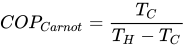
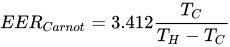
The SEER and EER of an air conditioner are limited by the laws of thermodynamics. The refrigeration process with the maximum possible efficiency is the Carnot cycle. The COP of an air conditioner using the Carnot cycle is:
where is the indoor temperature and is the outdoor temperature. Both temperatures must be measured using a thermodynamic temperature scale based at absolute zero such as Kelvin or Rankine. The EER is calculated by multiplying the COP by 3.412 BTU/W⋅h as described above:
Assuming an outdoor temperature of 95 °F (35 °C) and an indoor temperature of 80 °F (27 °C), the above equation gives (when temperatures are converted to the Kelvin or Rankine scales) a COP of 36, or an EER of 120. This is about 10 times more efficient than a typical home air conditioner available today.
The maximum EER decreases as the difference between the inside and outside air temperature increases, and vice versa. In a desert climate where the outdoor temperature is 120 °F (49 °C), the maximum COP drops to 13, or an EER of 46 (for an indoor temperature of 80 °F (27 °C)).
The maximum SEER can be calculated by averaging the maximum EER over the range of expected temperatures for the season.
SEER rating reflects overall system efficiency on a seasonal basis and EER reflects the system's energy efficiency at one specific operating condition. Both ratings are useful when choosing products, but the same rating must be used for comparisons.
Substantial energy savings can be obtained from more efficient systems. For example, by upgrading from SEER 9 to SEER 13, the power consumption is reduced by 30% (equal to 1 − 9/13).
With existing units that are still functional and well-maintained, when the time value of money is considered, retaining existing units rather than proactively replacing them may be the most cost effective. However, the efficiency of air conditioners can degrade significantly over time.[3]
But when either replacing equipment, or specifying new installations, a variety of SEERs are available. For most applications, the minimum or near-minimum SEER units are most cost effective, but the longer the cooling seasons, the higher the electricity costs, and the longer the purchasers will own the systems, the more that incrementally higher SEER units are justified. Residential split-system AC units of SEER 20 or more are now available. The higher SEER units typically have larger coils and multiple compressors, with some also having variable refrigerant flow and variable supply air flow.
In 1987 legislation taking effect in 1992 was passed requiring a minimum SEER rating of 10.[4] It is rare to see systems rated below SEER 9 in the United States because aging, existing units are being replaced with new, higher efficiency units.
Beginning in January 2006 a minimum SEER 13 was required.[5] The United States requires that residential systems manufactured after 2005 have a minimum SEER rating of 13. ENERGY STAR qualified Central Air Conditioners must have a SEER of at least 14.5. Window units are exempt from this law so their SEERs are still around 10.
In 2011 the US Department of Energy (DOE) revised energy conservation rules to impose elevated minimum standards and regional standards for residential HVAC systems.[6] The regional approach recognizes the differences in cost-optimization resulting from regional climate differences. For example, there is little cost benefit in having a very high SEER air conditioning unit in Maine, a state in the northeast US.
Starting January 1, 2015, split-system central air conditioners installed in the Southeastern Region of the United States of America must be at least 14 SEER. The Southeastern Region includes Alabama, Arkansas, Delaware, Florida, Georgia, Hawaii, Kentucky, Louisiana, Maryland, Mississippi, North Carolina, Oklahoma, South Carolina, Tennessee, Texas, and Virginia. Similarly, split-system central air conditioners installed in the Southwestern Region must be a minimum 14 SEER and 12.2 EER beginning on January 1, 2015. The Southwestern Region consists of Arizona, California, Nevada, and New Mexico. Split-system central air conditioners installed in all other states outside the Southeastern and Southwestern regions must continue to be a minimum of 13 SEER, which is the current national requirement.[6]
There have been many new advances in efficient technology over the past 10 years which have enabled manufacturers to increase their SEER ratings dramatically in order to stay above the required minimums set by the United States department of energy.[citation needed]
Effective January 1, 2023, cooling products will be subject to regional minimum efficiencies, according to Seasonal Energy Efficiency Ratio 2 (SEER2). New M1 testing procedure[7] is designed to better reflect current field conditions. DOE increases systems' external static pressure from current SEER (0.1 in. of water) to SEER2 (0.5 in. of water). These pressure conditions were devised to consider ducted systems that would be seen in the field. With this change, new nomenclature will be used to denote M1 ratings (including EER2 and HSPF2).[8]
Electric power is usually measured in kilowatts (kW). Electric energy is usually measured in kilowatt-hours (kW·h). For example, if an electric load that draws 1.5 kW of electric power is operated for 8 hours, it uses 12 kW·h of electric energy. In the United States, a residential electric customer is charged based on the amount of electric energy used. On the customer bill, the electric utility states the amount of electric energy, in kilowatt-hours (kW·h), that the customer used since the last bill, and the cost of the energy per kilowatt-hour (kW·h).
Air-conditioner sizes are often given as "tons" of cooling, where 1 ton of cooling equals 12,000 BTU/h (3.5 kW). 1 ton of cooling equals the amount of power that needs to be applied continuously over a 24-hour period to melt 1 ton of ice.
The annual cost of electric energy consumed by an air conditioner may be calculated as follows:
An air-conditioning unit rated at 72,000 BTU/h (21 kW) (6 tons), with a SEER rating of 10, operates 1000 hours per year at an electric energy cost of $0.12 per kilowatt-hour (kW·h). What is the annual cost of the electric energy it uses?
A residence near Chicago has an air conditioner with a cooling capacity of 4 tons and an SEER rating of 10. The unit is operated 120 days each year for 8 hours per day (960 hours per year), and the electric energy cost is $0.10 per kilowatt-hour. What is its annual cost of operation in terms of electric energy? First, we convert tons of cooling to BTU/h:
Today there are mini-split (ductless) air conditioner units available with SEER ratings up to 42.[10][11] During the 2014 AHR Expo, Mitsubishi unveiled a new mini-split ductless AC unit with a SEER rating of 30.5.[12]GREE also released a 30.5 SEER rating mini split in 2015 as well.[13]Carrier launched a 42 SEER ductless air conditioner during 2018 Consumer electronic Show (CES), held in Las Vegas.[14] Traditional AC systems with ducts have maximum SEER ratings slightly below these levels. Also, practically, central systems will have an achieved energy efficiency ratio 10–20% lower than the nameplate rating due to the duct-related losses.
Additionally, there are ground-source residential AC units with SEER ratings up to 75.[15] However, ground-source heat pump effective efficiency is reliant on the temperature of the ground or water source used. Hot climates have a much higher ground or surface water temperature than cold climates and therefore will not be able to achieve such efficiencies. Moreover, the ARI rating scheme for ground-source heat pumps allows them to largely ignore required pump power in their ratings, making the achievable SEER values often practically lower than the highest efficiency air-source equipment—particularly for air cooling. There are a variety of technologies that will allow SEER and EER ratings to increase further in the near future.[16] Some of these technologies include rotary compressors, inverters, DC brushless motors, variable-speed drives, and integrated systems such as those found in solar-powered air conditioning.[16]
A refrigeration cycle can be operated as a heat pump to move heat from outdoors into a warmer house. A heat pump with a higher SEER rating for cooling mode would also usually be more efficient in heating mode, rated using HSPF. When operated in heating mode, a heat pump is typically more efficient than an electrical resistance heater. This is because a space heater can convert only the input electrical energy directly to output heat energy, while a heat pump transfers heat from outdoors. In heating mode, the coefficient of performance is the ratio of heat provided to the energy used by the unit. An ideal resistance heater converting 100% of its input electricity to output heat would have COP = 1, equivalent to a 3.4 EER. The heat pump becomes less efficient as the outside temperature decreases, and its performance may become comparable to a resistance heater. For a heat pump with the minimum 13 SEER cooling efficiency, this is typically below −10 °F (−23 °C).[17]
Lower temperatures may cause a heat pump to operate below the efficiency of a resistance heater, so conventional heat pumps often include heater coils or auxiliary heating from LP or natural gas to prevent low efficiency operation of the refrigeration cycle. "Cold climate" heat pumps are designed to optimize efficiency below 0 °F (−18 °C). As of 2023 heat pumps are marketed that will extract heat from outdoor temperatures as low as −40 °F (−40 °C). In the case of cold climates, water or ground-source heat pumps are often the most efficient solution. They use the relatively constant temperature of ground water or of water in a large buried loop to moderate the temperature differences in summer and winter and improve performance year round. The heat pump cycle is reversed in the summer to act as an air conditioner.
A packaged terminal air conditioner (PTAC) is a type of self-contained heating and air conditioning system intended to be mounted through a wall.[1] The first practical semi-portable air conditioning unit invented by engineers at Chrysler Motors. It entered the market in 1935, and was designed to fit under a window like many modern PTACs.[2]
PTACs are commonly found in commercial settings (hotels, motels, hospitals), or multifamily facilities (senior housing, condominiums, apartment buildings). PTACs are mostly used to cool individual living spaces, there are units which offer resistance heating and/or heat pumps.[3] (The latter are more properly described as packaged terminal heat pumps or PTHP). PTACs with support for external heating through a hydronic heating coil or natural gas heating also exist. Typical PTAC heating and cooling capacity values range from 7,000–19,000 BTU/h (2 to 5.5 kilowatts) nominal.[4]
PTACs are commonly installed in window walls and masonry walls, with multiple standard dimensions available including 42×16 inches (1067x406 mm), 36x15 inches, and 40x15 inches. Their installation typically requires the following:
^"AC Repair"(PDF). Water Cooled Packaged Air Conditioners. Archived from the original on August 13, 2021. Retrieved May 12, 2021.cite web: CS1 maint: bot: original URL status unknown (link)